


Really pleased with my Moonstone. It has a beautiful look and feels well-finished.
Lapis Lazuli is known as the stone of wisdom & self-expression. Associated with the Third Eye Chakra, it helps in expanding awareness within & outside; opening the mind to new ideas. It also aids in thyroid, hormonal imbalance and body weight issues.
Couldn't load pickup availability

The Sar-e-Sang mines of Badakhshan, in north-eastern Afghanistan, have been worked for more than six thousand years. They are among the oldest continuously mined sources of any gemstone on earth — and almost all of the world's finest Lapis Lazuli has come from them.
The deep blue of Tutankhamun's burial mask came from these mines. So did ultramarine, the pigment Renaissance painters reserved for the Virgin's robe, once worth more by weight than gold.
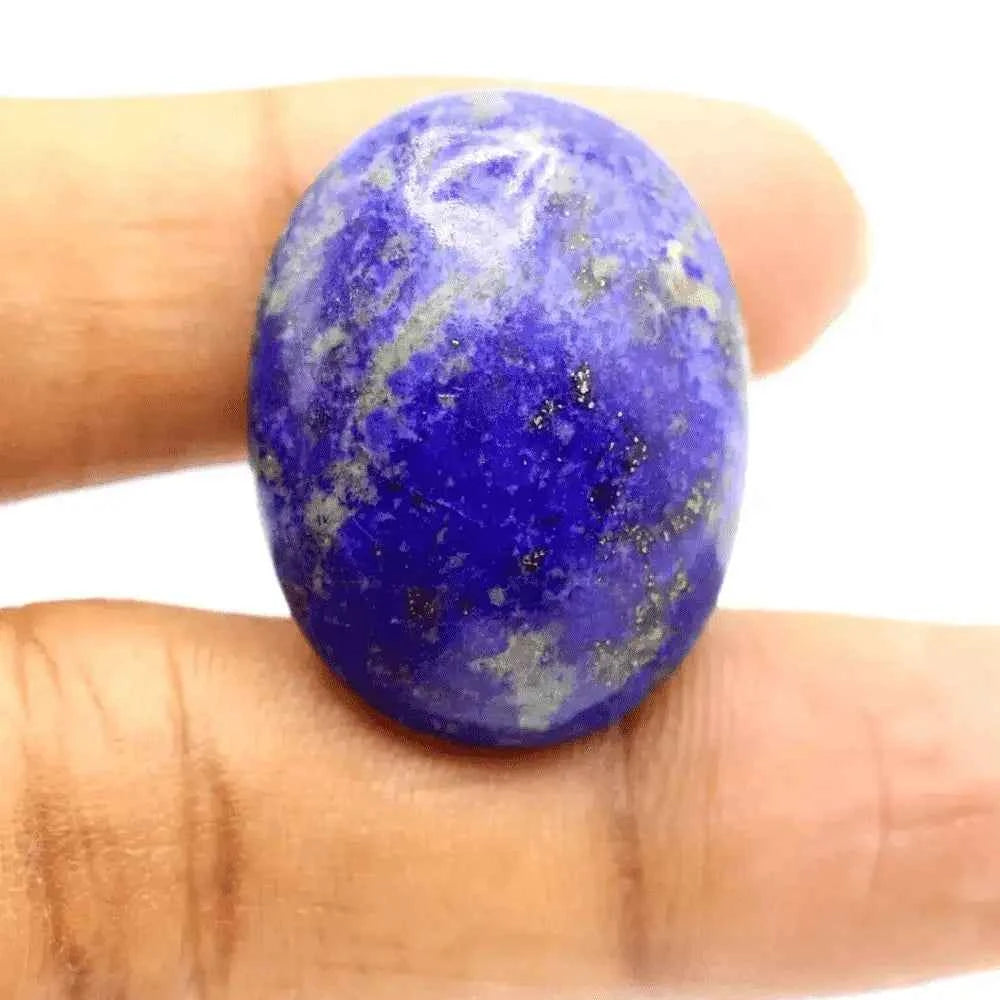
The Natural Lapis Lazuli from RudraGram is 100% genuine and lab certified, with the certificate supplied.
Unlike most gemstones, Lapis is not a single mineral — it is a rock, and that is what gives it its character.
The finest grade is an even, intense blue with fine golden pyrite scattered through it and little visible calcite. Those gold flecks are not added glitter — they are natural pyrite, and their presence is one of the marks of a genuine stone.
In Vedic gemology, Lapis Lazuli — Lajward — is worn as an upratna, a substitute gemstone, for Neelam (Blue Sapphire), and is therefore associated with Shani (Saturn).
This matters more than it sounds, because Neelam is the gemstone astrologers are most cautious about. It is considered the fastest-acting and least forgiving of all stones — traditionally worn on trial first, and never on a casual recommendation.
Lapis is the gentler route to the same graha. It is traditionally worn for:
Lapis is widely imitated, and the substitutes are convincing at a glance. Please check this before buying from anyone, including us.
What is commonly sold as Lapis:
What to look for:
| Specification | Details |
|---|---|
| Stone | Lapis Lazuli (Lajward) |
| Origin | Afghanistan (Badakhshan region) |
| Composition | Lazurite with natural calcite and pyrite |
| Treatment | Natural — please see the certificate supplied |
| Planet | Shani (Saturn) |
| Upratna of | Neelam (Blue Sapphire) |
| Hardness | 5 to 5.5 on the Mohs scale — a relatively soft stone |
| Certification | Lab certified — certificate included |
(Please check the carat weight, cut, shape and available sizes listed on the product page before ordering.)
Shani Beej Mantra: "Om Pram Preem Praum Sah Shanaischaraya Namah" Shani Mantra (simple): "Om Sham Shanicharaya Namah"
Reciting the Hanuman Chalisa on Saturdays is the most widely kept Shani practice in India, as Lord Hanuman is traditionally linked with easing Saturn's harshness. Offering mustard oil at a Shani temple and donating black sesame, urad dal or a blanket on Saturdays are the other traditional remedies — and they cost almost nothing.
Lapis is a soft, porous stone and needs more care than a sapphire or a ruby.
Cared for properly, lapis holds its colour for decades. Treated carelessly, it dulls quickly.
For queries, reach us on WhatsApp at +91-8193014001 or email info@rudragram.com.
What is Lapis Lazuli? It is a deep blue rock made of lazurite, with natural calcite and golden pyrite. The finest material comes from the Sar-e-Sang mines in Badakhshan, Afghanistan, which have been worked for over six thousand years.
Which planet does Lapis belong to? In Vedic gemology it is worn as an upratna, or substitute, for Blue Sapphire, and is therefore associated with Shani (Saturn).
Why choose Lapis instead of a Neelam? Blue Sapphire is the gemstone astrologers are most cautious about — fast-acting and unforgiving if it does not suit the chart, which is why it is traditionally worn on trial first. An upratna is considered gentler, and is far more affordable. Whether either suits you is a question for an astrologer.
How do I know it is not dyed jasper? By the certificate, and by the pyrite. Genuine lapis carries irregular golden pyrite flecks embedded in the stone, and usually some white calcite. A uniform, flawless blue at a low price is almost always dyed material.
Are the gold flecks real? Yes — they are natural pyrite, part of the rock itself. They are not added glitter, and their presence is one of the marks of genuine lapis.
Is white in the stone a defect? No. Calcite is a natural part of lapis. Fine grades have less of it, but some presence is normal and is a sign the stone has not been reconstituted or dyed.
Does the colour fade? Natural lapis holds its colour well if it is kept away from chemicals, perfume and prolonged sunlight. Dyed or waxed material fades quickly — which is one way people discover, too late, what they actually bought.
Do I need an astrologer's advice to wear it? For a gemstone, yes, we would recommend it. Unlike a Rudraksha or a yantra, a gemstone acts on a specific graha and is chosen for a specific chart.
Which finger and metal should it be worn in? Traditionally the middle finger, set in silver or panchdhatu.
On which day should I start wearing it? Saturday, the day of Shani, in the evening.
Can women wear Lapis Lazuli? Yes. There are no restrictions of gender or age.
Can I wear it alongside a Rudraksha? Yes, that is common. Rudraksha and gemstones come from different traditions and are frequently worn together.
What is your shipping and return policy for this product? We offer free shipping across India (4–5 business days); international shipping is calculated at checkout. Returns are accepted in case of damage, defect, or wrong item, within 7 days — see our Refund Policy and Shipping Policy for full details.
Note: Gemstones are traditional astrological items used for personal belief and practice. Individual experiences may vary, and a gemstone is not a substitute for professional medical, financial or legal advice.

See shipping policy for details
Contact our support team
COD/UPI/CARDS
Products for everyday devotion
Overall rating: 4.7 / 5 from 9 reviews.
Really pleased with my Moonstone. It has a beautiful look and feels well-finished.

I had a few questions before placing my order, and the support team was very patient and helpful. The whole process was smooth.
I had been searching for a good-quality Lapis Lazuli and I’m glad I ordered this one. It arrived safely packed and looks great in person.
’m really happy with this Lapis Lazuli. The deep blue color looks beautiful and the stone feels nicely finished. Very satisfied with my purchase.
Glad I found a product I genuinely like.
A lovely gemstone with rich color and excellent polish. Very satisfied with its authenticity and overall beauty.
Beautiful deep blue color with a natural look and smooth finish. The quality and appearance are truly impressive.
Beautiful natural Lapis Lazuli gemstone with a rich deep-blue color and excellent quality. A perfect choice for jewelry or crystal lovers, offering great value and an elegant appearance."
stone is very beautiful
Find answers to common questions about our sacred products
Yes, every Rudraksha, gemstone, and mala at RudraGram is sourced from trusted origins and comes with an authenticity/lab certification (where applicable), so you can verify quality and genuineness.
Selection generally depends on your birth chart, zodiac sign, or the specific life area you want to strengthen (health, wealth, relationships, career). We recommend consulting an astrologer, or you can message our team for guidance before purchasing.
Yes, most Rudraksha, yantras, and kavach items require energization through proper mantra rituals before wearing or placing them.
Each product comes with usage guidelines (thread/chain type, which hand or day to wear it, placement direction for yantras, etc.). A detailed instruction card/guide is included with your order.
Most items can be worn daily; however, some traditions suggest removing certain malas/beads during specific activities (bathing, sleeping, non-vegetarian meals, etc.). Specific dos and don'ts are listed in the product description.
Natural Rudraksha beads have slight variations in size, texture, and mukhi lines since they come directly from nature, while lab-certified ones carry an official report confirming their authenticity, origin, and mukhi count.
We offer free shipping across India, with delivery in 4–5 business days. For international orders, shipping charges apply separately (calculated at checkout based on destination and order weight), and delivery typically takes 15–20 business days, depending on the location.
Since these are sacred/religious products, we accept returns only in case of damage, defect, or wrong item received within 7 days of receiving the product — please refer to our return policy page for full details.
Wipe gently with a soft, dry cloth after use; avoid direct contact with soap, perfume, or chemicals, and store in a clean pouch when not wearing it to preserve its energy and shine.
Yes, applicable products (gemstones, certified Rudraksha) are shipped with an authenticity certificate; for other items, product details and sourcing information are shared on the listing itself.

 -17%
-17%
 -11%
-11%

 -15%
-15%


