RudraGram is an Indian online store for natural Rudraksha, operated by QHR Solutions Private Limited. You can buy Rudraksha here from 1 Mukhi to 14 Mukhi, along with Gauri Shankar and Ganesh Mukhi beads, and you can use this page as a plain-language guide to checking any Rudraksha before you pay for it.

Our 3 Mukhi to 14 Mukhi beads are of Nepal origin. Our 1 Mukhi and 2 Mukhi are sourced from Rameswaram in South India. Each product page states the origin and the size range in millimetres, and every Rudraksha ships with a certificate of authenticity.

Rudraksha is a natural seed, so no two beads are exactly alike. Size, colour and the depth of the mukhi lines all vary, and price depends on mukhi count, size and rarity. We wrote this page so that you know what to look for — origin, mukhi count, photographs and paperwork — whether you buy from us or from anyone else.

We deliver across India, and Cash on Delivery is available on eligible orders. If you are not sure which mukhi to choose, message us on WhatsApp at +91-8193014001 and our team will help you compare options.

Buy Original Rudraksha Online from RudraGram

Choose a mukhi below. Each product page shows the origin, the size range, the certificate photo and the current price. Prices differ by mukhi, size and rarity: common beads such as 4 Mukhi and 5 Mukhi start at a few hundred rupees, while rarer mukhis such as 13 and 14 Mukhi cost considerably more.

Explore 1 Mukhi to 14 Mukhi Rudraksha 

A "mukhi" is a natural line or cleft running from the top of the bead to the bottom; the number of mukhis gives the bead its name. In Hindu tradition each mukhi is associated with a particular deity and set of qualities. These are matters of faith and tradition, not medical or financial promises. For wearing practice and more detail, see our Rudraksha Mukhi Guide.

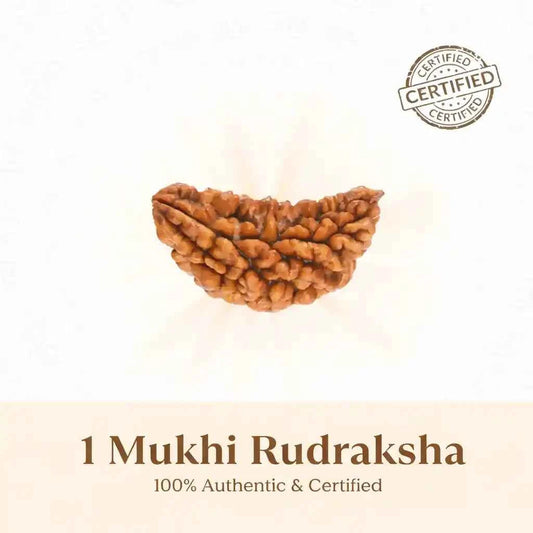
1 Mukhi Rudraksha

Traditionally associated with Lord Shiva and with a single-pointed focus in meditation. A 1 Mukhi has one natural line and is much rarer than other mukhis. Our 1 Mukhi is sourced from Rameswaram, South India [VERIFY: shape — round or cashew-shaped; size 20–26 mm]. Buy 1 Mukhi Rudraksha →

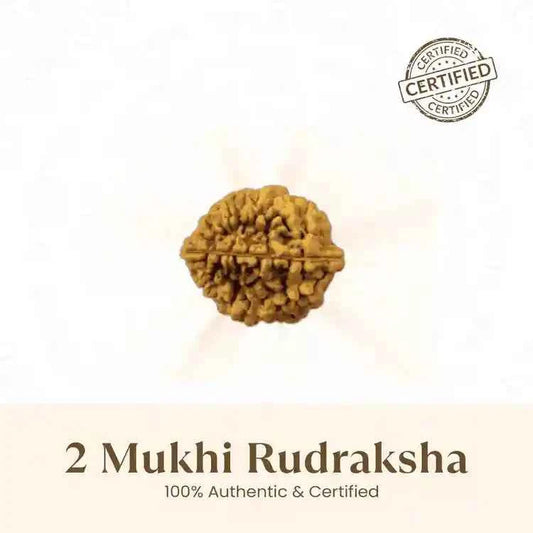
2 Mukhi Rudraksha

Traditionally associated with Shiva and Parvati together, and with harmony in relationships. It has two natural lines. Our 2 Mukhi is sourced from Rameswaram, South India, 20–24 mm. Buy 2 Mukhi Rudraksha →

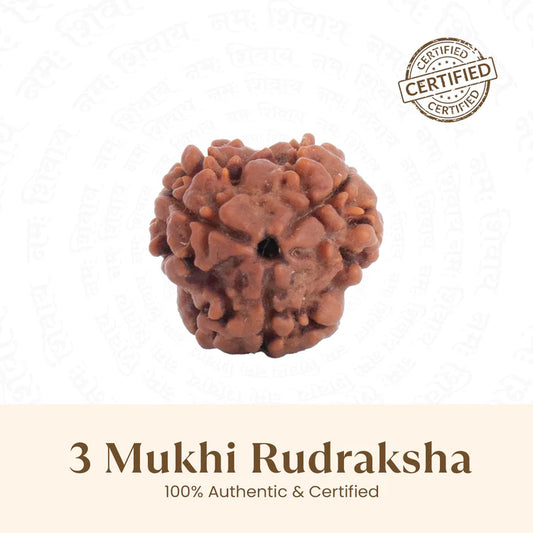
3 Mukhi Rudraksha

Traditionally associated with Agni, the fire deity, and with the idea of letting go of the past. Three natural lines; Nepal origin. Buy 3 Mukhi Rudraksha →

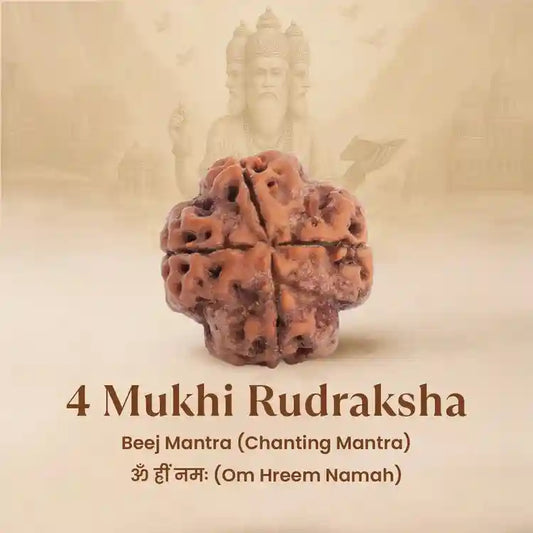
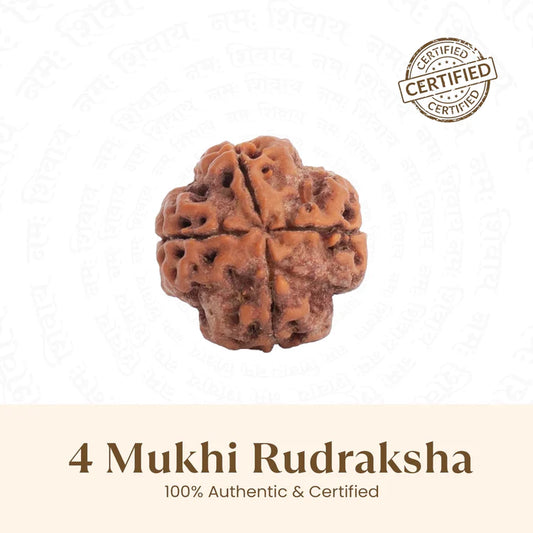
4 Mukhi Rudraksha

Traditionally associated with Brahma, and with learning, speech and creativity — which is why students often choose it. Four natural lines; Nepal origin. Buy 4 Mukhi Rudraksha →

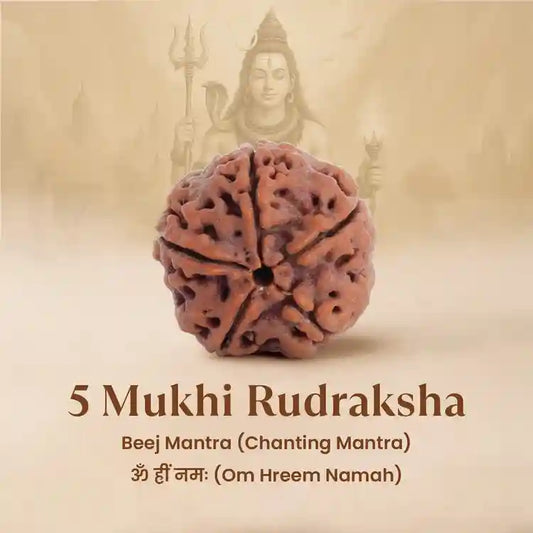
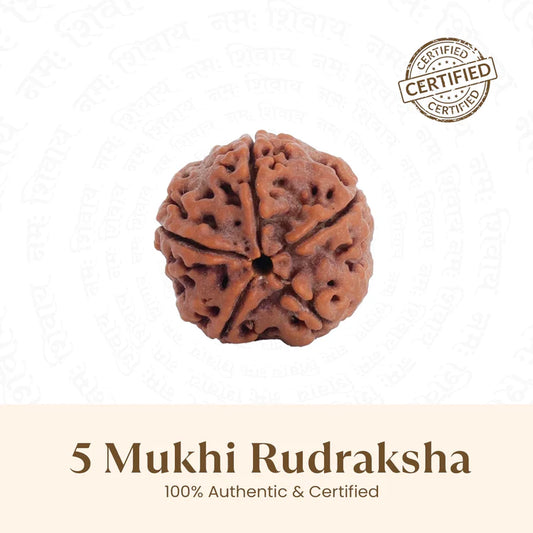
5 Mukhi Rudraksha

The most common Rudraksha, associated with Shiva in his Kalagni Rudra form and used widely in japa malas. Five natural lines; a common first bead. Nepal origin. Buy 5 Mukhi Rudraksha →

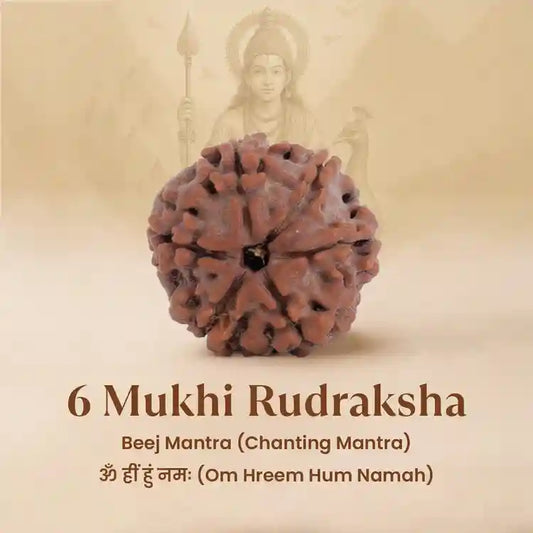
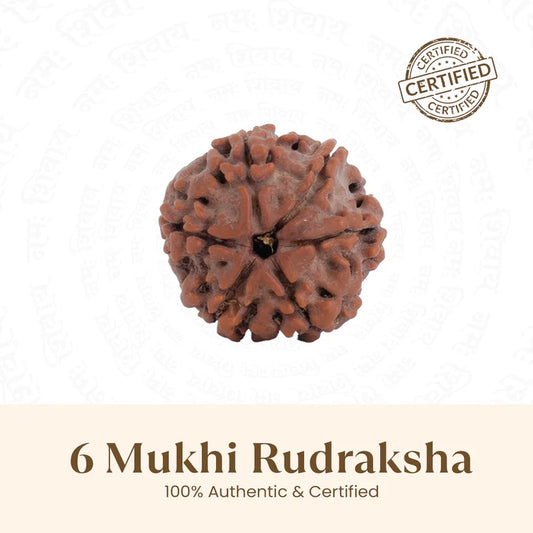
6 Mukhi Rudraksha

Traditionally associated with Lord Kartikeya, and with courage and discipline. Six natural lines; Nepal origin. Buy 6 Mukhi Rudraksha →

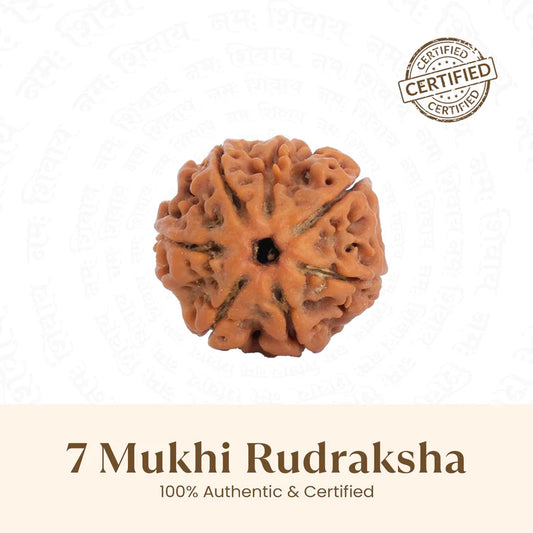
7 Mukhi Rudraksha

Traditionally associated with Goddess Lakshmi, and chosen by people who seek stability in work and household matters. This is a tradition and not a guarantee of any financial result. Seven natural lines; Nepal origin. Buy 7 Mukhi Rudraksha →

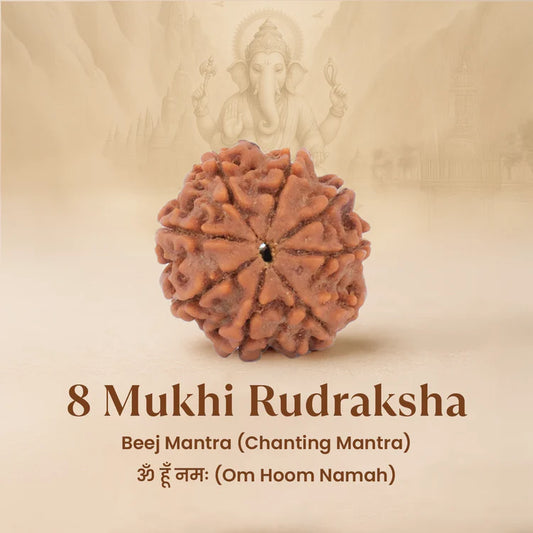
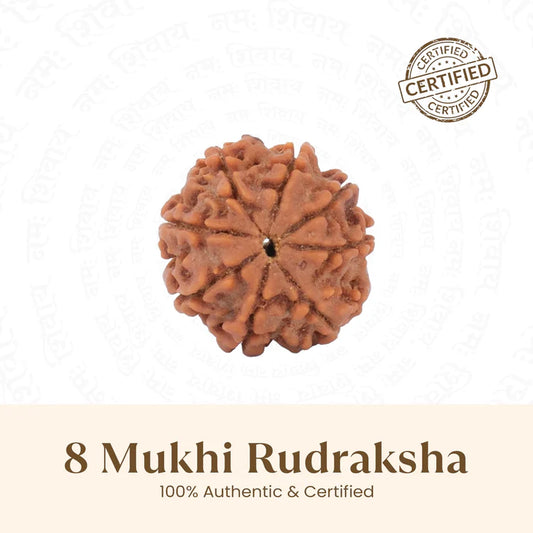
8 Mukhi Rudraksha

Traditionally associated with Lord Ganesha, the remover of obstacles. Eight natural lines; Nepal origin. Buy 8 Mukhi Rudraksha →

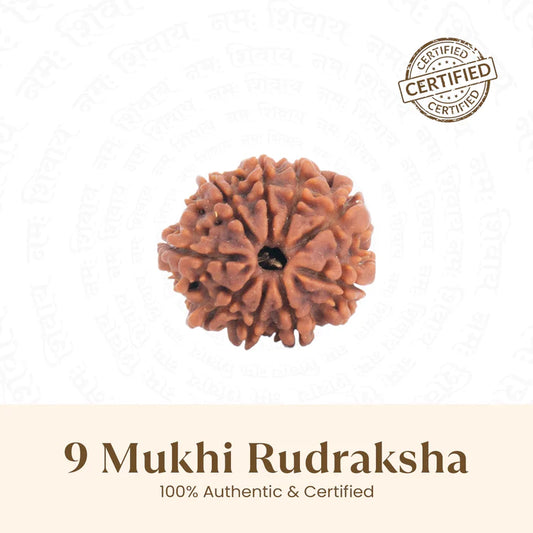
9 Mukhi Rudraksha

Traditionally associated with Goddess Durga, and with strength and protection. Nine natural lines; Nepal origin. Buy 9 Mukhi Rudraksha →

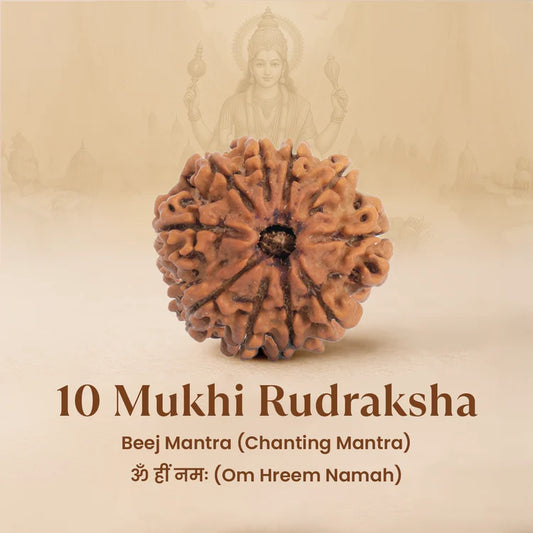
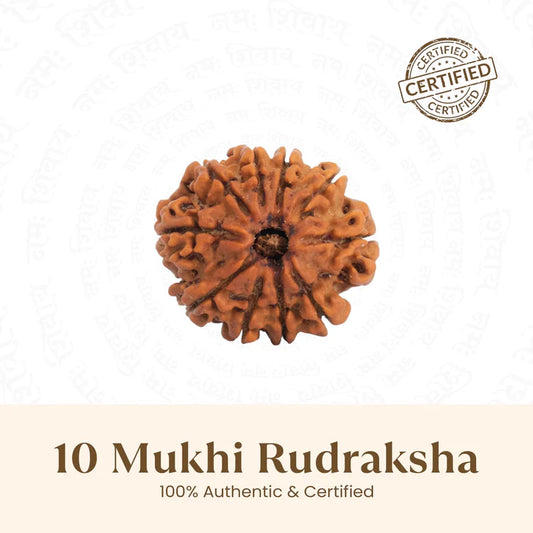
10 Mukhi Rudraksha

Traditionally associated with Lord Vishnu, and with a sense of protection and steadiness. Ten natural lines; Nepal origin. Buy 10 Mukhi Rudraksha →

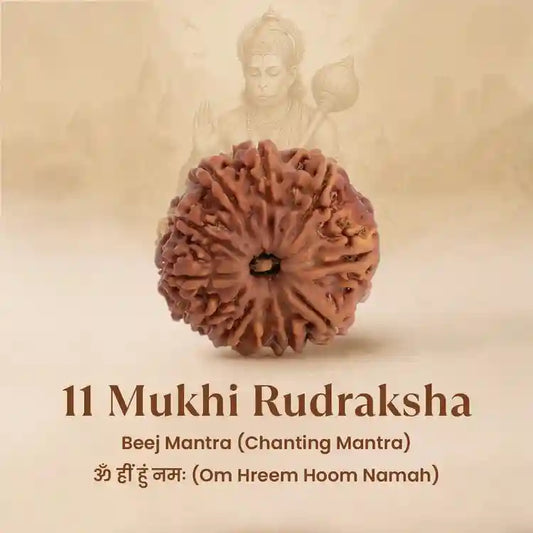
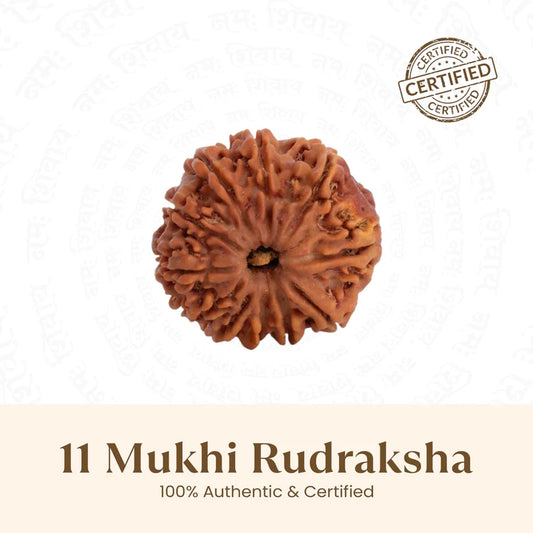
11 Mukhi Rudraksha

Traditionally associated with Lord Hanuman, and with courage and devotion. Eleven natural lines; Nepal origin. Buy 11 Mukhi Rudraksha →

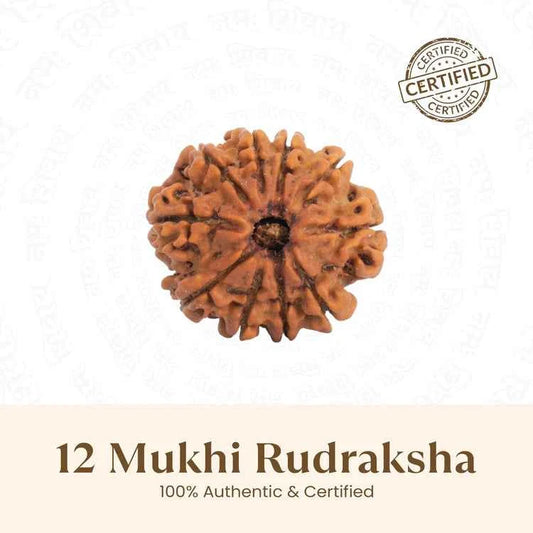
12 Mukhi Rudraksha

Traditionally associated with Surya, the Sun deity, and with leadership and confidence. Twelve natural lines; Nepal origin, 17–22 mm. Buy 12 Mukhi Rudraksha →

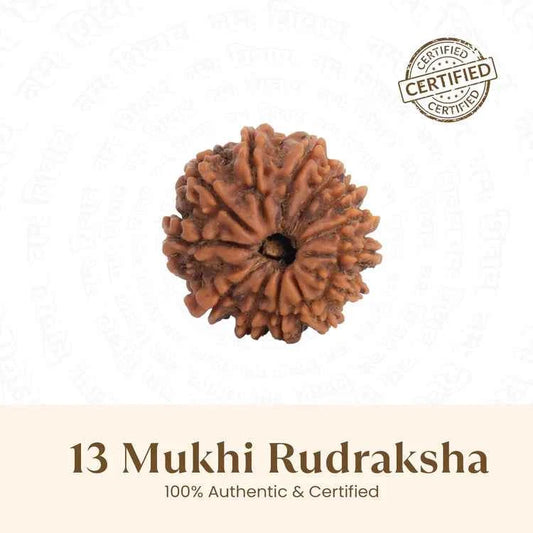
13 Mukhi Rudraksha

Traditionally associated with Kamadeva, and with charm and harmony in relationships. Thirteen natural lines; Nepal origin, 17–22 mm. Buy 13 Mukhi Rudraksha →

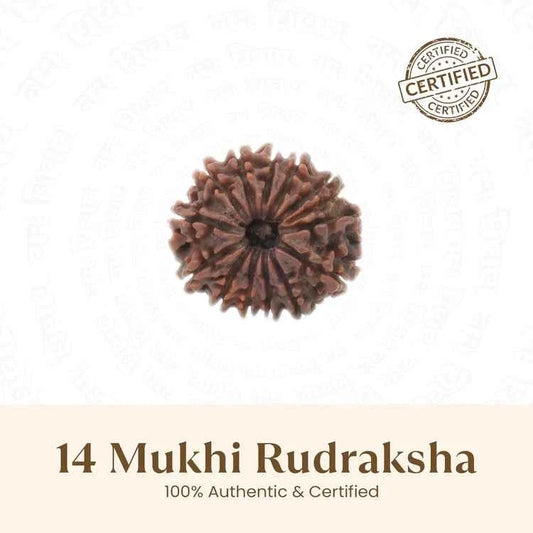
14 Mukhi Rudraksha

Traditionally associated with Shiva, and with deep meditation and inner strength. Fourteen natural lines; among the rarer beads. Nepal origin, 17–22 mm. Buy 14 Mukhi Rudraksha →

Gauri Shankar and Ganesh Mukhi Rudraksha

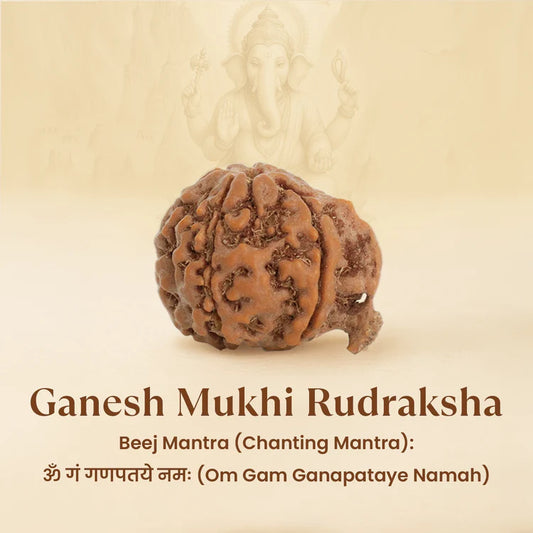
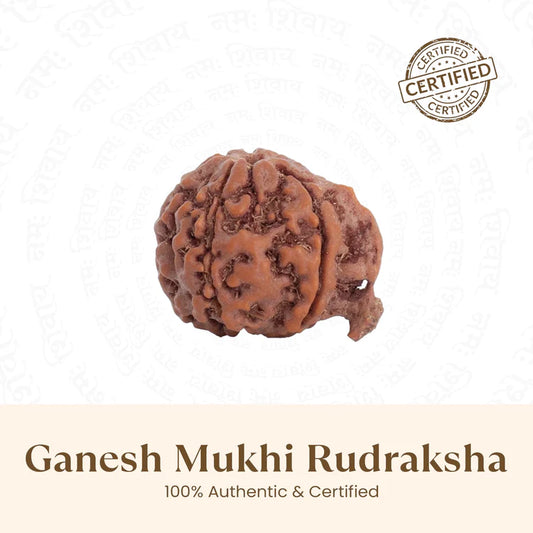
Gauri Shankar is a natural pairing of two beads joined together, traditionally associated with Shiva and Parvati. Ganesh Mukhi has a natural trunk-like ridge and is traditionally associated with Lord Ganesha. Ask for close-up photographs of these before buying, because joined and carved beads are often imitated. Gauri Shankar Rudraksha → · Ganesh Mukhi Rudraksha →.

Looking for a set? See our Rudraksha combinations.

Nepal Origin Rudraksha 

What "Nepal origin" means

Nepal origin Rudraksha are the seeds of Elaeocarpus ganitrus trees grown and harvested in Nepal. Rudraksha also grows in India and Indonesia. Nepali beads are generally larger, with deeper and more clearly defined mukhi lines, which is why many buyers prefer them for higher mukhis.

How origin should be documented

There is no single government "origin certificate" for Rudraksha. In practice, origin is stated by the seller and, sometimes, on the certificate. A trustworthy listing should say the origin in writing on the product page, show the size in millimetres, and be able to answer a direct question about where the batch was sourced. A laboratory can identify whether a bead is a natural seed and check its mukhi count, but it cannot always prove which country a bead came from, so treat origin as the seller's stated information and judge the seller accordingly.

Nepal and Indonesian Rudraksha compared

Neither is automatically better. Both are natural Rudraksha; the choice depends on the size you prefer, your budget and your purpose. Size alone cannot prove origin, so ask the seller. At RudraGram: 3–14 Mukhi are Nepal origin; 1 and 2 Mukhi come from South India (Rameswaram). We do not currently list Indonesian beads on this page.

Browse Rudraksha beads.

How to Identify an Original Rudraksha 

Short answer: An original Rudraksha is a natural seed with a rough, grooved surface and naturally formed mukhi lines that run from the top hole to the bottom hole. The number of lines must match the mukhi you are paying for, and the bead should have no sign of glue, filler, carving or dye.

What a natural bead looks like

  • A hard, dry, rough-textured seed with a hole through the length, not a smooth, uniform, plastic-like surface.
  • Mukhi lines that run continuously from top to bottom, with edges that look natural rather than cut.
  • Slight irregularity in shape and size. Perfect symmetry across a set of beads is a reason to look closer.
  • A weight and hardness consistent with wood-like seed, not a light plastic or heavy resin.

Common signs of a fake or altered bead

  • Carved or added mukhi lines: a lower-mukhi bead cut to look like a higher-mukhi bead. Look for lines that stop abruptly, have sharp, clean edges or look filled with a different material.
  • Joined beads: two beads glued to pass as Gauri Shankar, or extra beads stuck onto a bead.
  • Look-alike seeds and moulded beads: wood, resin or plastic beads, sometimes dyed to look older.
  • Dyed or heavily polished surfaces used to hide flaws.

Home tests that do not work

Popular tests — floating or sinking in water, spinning between two copper coins, heating a needle — are not reliable. Density varies with the maturity of the seed, and some fakes can be made to pass them. Heating or piercing a bead can also damage a real one. Use them, if at all, only as curiosity, not proof. A reliable check combines close-up photographs, a verifiable certificate and a seller you can question. For more see Rudraksha lab certification.

Rudraksha Lab Certification 

What a certificate can and cannot show

A Rudraksha certificate is a written statement, from a testing laboratory or an authorised issuer, about the bead in front of you. Depending on the issuer, it can confirm that the bead is a natural Rudraksha seed, the mukhi count, and the size and weight. Some laboratories use X-ray imaging to check the internal chambers against the number of surface lines. A certificate does not measure or prove spiritual effect, and it does not by itself prove origin.

What a certificate should contain

  • Name and contact details of the issuer
  • A certificate number
  • The date of testing
  • Details of the bead: mukhi count, size, weight
  • A photograph of the bead, and the name of the seller
  • A signature or stamp, and a way to verify it (online lookup, QR code or phone)

How to check a certificate

  1. Match the certificate details and photograph against the bead you received.
  2. Confirm the issuer exists and can be contacted.
  3. Use the certificate number to verify with the issuer where verification is offered.
  4. Treat a generic, unsigned or unverifiable certificate as weak evidence.

Certification at RudraGram

Every Rudraksha from RudraGram comes with an identification report from Global Gems Testing Labs (GGTL), included in the price. The GGTL report lists the bead's colour, weight, measurements and hardness, a natural-formation remark, the origin stated by the lab, a photograph of the bead, a report number and a QR code .

If you want a more detailed test, you can select an IGL Rudraksha Identification Report on the product page for an extra ₹800. IGL (Rudraksha Testing & Research Laboratory, New Delhi) examines the bead with X-rays and magnification, reports the number of natural compartments against the natural faces, states whether any faces are artificial, and records the genus (Elaeocarpus ganitrus) and stated origin.

Each report describes the individual bead named on it. Compare the report number, photograph and measurements with the bead you receive.

How RudraGram Verifies Rudraksha Authenticity 

Only the steps that we can document are listed here.

  1. Sourcing. 1 Mukhi and 2 Mukhi are sourced from Rameswaram in South India; 3 Mukhi to 14 Mukhi are sourced from Nepal. 
  2. Laboratory report. Every Rudraksha comes with a GGTL identification report. An IGL report with X-ray testing is available for an additional ₹800
  3. Energization. Beads are energized before dispatch. Because of this, worn or energized beads cannot be returned for change of mind (see the Refund Policy).
  4. Packing and dispatch. Orders are processed within 1–3 business days and shipped with tracking (see the Shipping Policy).

Where to Buy Original Rudraksha in India?

How to evaluate any seller

Whether you buy from RudraGram or elsewhere, check the following:

  1. Origin. Does the listing state where the bead was sourced (Nepal, India, Indonesia)?
  2. Mukhi identification. Is the mukhi count stated clearly, and can you see the lines in a photograph?
  3. Photographs. Are the photos of the actual product, or a stock image?
  4. Size. Is the size given in millimetres?
  5. Certificate. Is there a named issuer and a certificate number you can check?
  6. Testing. Is it clear what was tested, by whom, and on which beads?
  7. Transparency. Is there a real business name, a phone number that is answered, and a clear "About" page?
  8. Return policy. What happens if the bead is damaged or not as described?
  9. Support. Can you ask questions before buying and get a straight answer?
  10. Shipping. Are delivery timelines and charges stated, and is tracking provided?

Be cautious of very low prices for rare mukhis such as 1 Mukhi or 14 Mukhi, and of claims like "100% guaranteed" that no document supports.

What you get when you buy from RudraGram

  • The origin and size range on each product page (3–14 Mukhi Nepal; 1 and 2 Mukhi South India).
  • A Global Gems Testing Labs (GGTL) report with every Rudraksha, and the option of an IGL X-ray report for ₹800 extra.
  • Delivery across India, with tracking. Orders are processed in 1–3 business days and usually delivered in 3–5 working days. Cash on Delivery is available on eligible orders (see the Shipping Policy).
  • If an order arrives damaged, defective or different from what you ordered, contact us within 7 days of delivery for a replacement or refund. See the Refund Policy for the packing-video requirement on returns.
  • A team you can reach at +91-8193014001 (call or WhatsApp) or info@rudragram.com.

If you also want other spiritual products, we carry gemstones, japa malas, bracelets, kavach, yantras and Black Horse Shoe items.

Rudraksha Buying Guide

Choosing your first Rudraksha

Start with your purpose. If you want a bead for daily chanting or meditation, a 5 Mukhi is the traditional and most widely used choice. If you have been advised a particular mukhi, or want to explore one for its traditional association, use the guide above. Then decide on size, check the origin and the certificate, and buy from a seller who answers your questions. If you are choosing for a specific purpose or by birth chart, our guide on how to choose a Rudraksha combination and our team on WhatsApp can help. Rudraksha is worn as a matter of faith and is not a substitute for medical, legal or financial advice.

Why price differs between beads

  • Mukhi count: the higher and rarer the mukhi, the higher the price.
  • Size: larger, well-formed beads cost more.
  • Origin: Nepal-origin beads are commonly priced higher than smaller beads from other regions.
  • Form and quality: clearly defined lines, a firm, undamaged surface and a well-formed shape affect price.

A price far below the normal range for a rare mukhi is a reason to ask more questions.

Frequently Asked Questions

Where can I buy original Rudraksha in India?

You can buy original Rudraksha from sellers who state the origin and mukhi count of each bead, show photographs of the actual product, and provide a certificate of authenticity with a clear return policy. RudraGram, an Indian online store operated by QHR Solutions Private Limited, sells Rudraksha from 1 Mukhi to 14 Mukhi with a certificate of authenticity and delivers across India.

→ Shop Rudraksha

How can I identify an authentic Rudraksha?

Check that the bead is a real seed with a rough, naturally grooved surface, that the number of mukhi lines matches the mukhi you are paying for, and that the lines run continuously from the top hole to the bottom hole. Look for signs of glue, filler or carving. Because some fakes look convincing, rely on a certificate from an issuer you can verify.

→ How to identify an original Rudraksha

How is Rudraksha certified?

A Rudraksha is examined, usually by a testing laboratory or authorised issuer, to confirm that it is a natural seed and to check its mukhi count and dimensions. The certificate should carry the bead's details, a certificate number and the issuer's identity. Some laboratories also use X-ray imaging to look at the internal chambers. A certificate does not measure spiritual effects.

Does RudraGram provide lab certification?

Yes. Every RudraGram Rudraksha comes with an identification report from Global Gems Testing Labs (GGTL), included in the price. For a more detailed test, an IGL Rudraksha Identification Report, which includes X-ray imaging of the bead's internal compartments, can be selected on the product page for an additional ₹800. Each report describes the individual bead, so you can compare its details with the bead you receive.

What is Nepal Origin Rudraksha?

Nepal origin Rudraksha means Rudraksha beads, the seeds of Elaeocarpus ganitrus trees, that were grown and harvested in Nepal. Nepali beads are generally larger, with clearly defined mukhi lines. Origin is normally stated by the seller or on the certificate, so ask for it in writing. At RudraGram, 3 Mukhi to 14 Mukhi are Nepal origin, while 1 Mukhi and 2 Mukhi come from Rameswaram in South India.

What is the difference between Nepal and Indonesian Rudraksha?

Both are natural Rudraksha from the same species, Elaeocarpus ganitrus. Nepali beads are generally larger, with deeper and more pronounced mukhi lines. Indonesian beads are usually smaller, with smoother surfaces, and are commonly priced lower. Neither is automatically better; the choice depends on the size you prefer and your budget. Size alone cannot prove origin, so ask the seller.

Which Mukhi Rudraksha are available?

RudraGram lists Rudraksha from 1 Mukhi to 14 Mukhi, along with Gauri Shankar and Ganesh Mukhi beads. 1 Mukhi and 2 Mukhi are sourced from South India, and 3 Mukhi to 14 Mukhi are Nepal origin. Availability and price vary by size, so check the product page or message us on WhatsApp for current stock.

How do I choose a Rudraksha?

Start with your purpose: daily japa or meditation, a particular mukhi you have been advised, or a first bead. A 5 Mukhi is the most common starting point. Then decide on size and budget, and confirm the origin and the certificate. Some people also choose by deity or astrological guidance. Our guide and WhatsApp team can help you compare options before you buy.

→ How to choose a Rudraksha

What should I check before buying Rudraksha online?

Check five things: the stated origin, the mukhi count and size in millimetres, photographs of the actual bead, a certificate with a named issuer and number, and the seller's return and shipping policies. Also make sure the seller has working contact details and answers questions. Be cautious of very low prices for rare mukhis such as 1 Mukhi or 14 Mukhi.

How can I verify a Rudraksha certificate?

Check that the certificate names the issuer, carries a certificate number, and describes your bead with its mukhi count, size and photograph. Compare it with the bead itself. Where the issuer offers online or phone verification, confirm the number with them directly. A certificate that is generic, unsigned or impossible to check offers little assurance.

Is every Rudraksha naturally different in size and shape?

Yes. Rudraksha is a natural seed, so size, colour, surface texture and the depth of the mukhi lines vary from bead to bead, even within the same mukhi. Small differences from product photographs are normal. What matters is that the mukhi count is correct, the bead is natural, and the size matches the range the seller states.

Does RudraGram deliver across India?

Yes. RudraGram ships across India. Orders are processed within 1 to 3 business days and are typically delivered in 3 to 5 working days, with shipping charges shown at checkout. Cash on Delivery is available on eligible orders. A tracking number is sent by email once the order ships. International orders are handled case by case through WhatsApp.

→ Shipping Policy

Can Rudraksha treat health conditions?

No. Rudraksha is worn mainly for spiritual and devotional reasons, and the qualities traditionally associated with each mukhi are matters of faith. Rudraksha is not a medical treatment, and RudraGram does not claim that it treats or cures any condition. If you have a health concern, please consult a qualified doctor.

What if my Rudraksha arrives damaged or is not what I ordered?

Contact RudraGram within 7 days of delivery at info@rudragram.com or +91-8193014001 with your order number and photos. If the item is verified as damaged, defective or incorrect, you can choose a replacement or a refund, and return shipping for such cases is arranged by RudraGram. Returns require a packing video, as explained in the Refund Policy.

→ Refund Policy

Do the water test or the coin test prove a Rudraksha is real?

No. Popular home tests, such as floating or sinking in water or spinning a bead between copper coins, are not reliable. Density varies with the maturity of the seed, and fake beads can be made to pass these tests. Heating or piercing a bead can damage a real one. A close check of the mukhi lines together with a verifiable certificate is more dependable.